
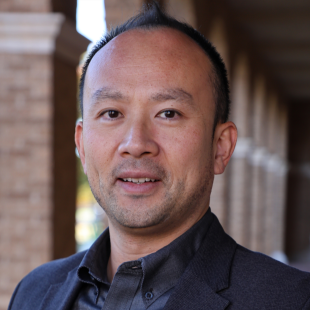
Changzhi Li
Texas Tech University
Publishing High-Impact Microwave Research in IEEE Transactions on Microwave Theory and Techniques: Perspectives from the Editor-in-Chief
Abstract
IEEE Transactions on Microwave Theory and Techniques (T-MTT) is the flagship journal of the IEEE Microwave Theory and Technology Society (MTT-S) and a leading Q1 publication dedicated to advancing microwave, millimeter-wave, and terahertz science and technology. In 2027, T-MTT will publish its 75th volume as the IEEE MTT-S celebrates its 75th anniversary, marking a milestone that reflects the Society's long-standing leadership and contributions to the global microwave community. This talk provides an overview of the journal's scope, editorial philosophy, and publication standards from the perspective of the Editor-in-Chief. It will discuss the characteristics of successful submissions, common challenges encountered during the review process, and practical strategies for strengthening technical contributions, experimental validation, and presentation. Emphasis will be placed on identifying impactful research opportunities and effectively communicating innovation to maximize both publication success and long-term research impact. The presentation aims to encourage greater participation from the Latin American microwave community and foster broader engagement with the global research community through high-quality publications in T-MTT.
Biography
Dr. Changzhi Li is a Professor and Whitacre Endowed Chair in Electrical and Computer Engineering at Texas Tech University. His research interests are microwave/millimeter-wave technologies for healthcare, security, energy efficiency, structural monitoring, and human-machine interface. Dr. Li is the Editor-in-Chief of the IEEE Transactions on Microwave Theory and Techniques. He was an IEEE Microwave Theory and Techniques Society (MTT-S) Distinguished Microwave Lecturer, in the Tatsuo Itoh class of 2022-2024 and the General Chair of the 2024 IEEE Radio Wireless Week (RWW) in San Antonio, TX. He was a recipient of the IET A F Harvey Prize, the IEEE MTT-S Outstanding Young Engineer Award, the IEEE Sensors Council Early Career Technical Achievement Award, the ASEE Frederick Emmons Terman Award, the IEEE-HKN Outstanding Young Professional Award, and the NSF Faculty CAREER Award. Dr. Li is a Fellow of the IEEE, the National Academy of Inventors (NAI), and the American Institute for Medical and Biological Engineering (AIMBE).

Luciano Tarricone
University of Salento, Lecce, Italy
Biomedical Applications of MW Fields and Their Enhancement with Artificial Intelligence
Abstract
Microwave fields are more and more adopted for a variety of biomedical applications, and among such applications, in the recent past, an important role is played by Electroporation (EP) induced by Pulsed Electric Fields (PEF). The exposure of cell membranes to PEF can induce the creation of pores, and such a phenomenon, when suitably governed, can be useful for many different applications. The generation of pores, as well as the nature of such pores (permanent or not), is linked to several parameters, among them we just mention the characteristics of the stimulating PEF signals, and the nature, position and geometry of the electrodes.
In many cases, the optimum choice of such parameters can make the difference and render the EP treatments very effective and specifically customized for a single patient and his/her specific needs. This choice is generally quite complicated, and may require a long time. In this talk we demonstrate that artificial intelligence, and more specifically deep-learning neural network (NN) approaches, can be the most appropriate solution to the problem of a very fast and optimum choice of the mentioned parameters.
Some examples of biomedical applications will be proposed, such as cardiac ablation or the combined use of EP and radiotherapy in oncological treatments. The proposed NN approaches pave the way to the development of protocols tuned for a specific treatment on a single patient, with a consequent impressive enhancement in terms of efficacy of the treatment and of reduction of side-effects, as well as of the duration of treatments.
Finally, we will show that the same NN approaches can be easily adopted also in very different biomedical applications, such as gesture recognition for telemedicine.
Biography
Luciano Tarricone was born in Galatone (Lecce, Italy), on May 24, 1966. He graduated summa cum laude in 1989 at Rome La Sapienza University, Italy, and received the PhD in the same university in 1993. He was a Research Fellow at the Italian National Institute of Health in 1990, and a researcher for IBM and IBM European Center for Scientific and Engineering Computing between 1990 and 1994. He was a Researcher and Professore Incaricato at the University of Perugia, Italy (1994-2001) and an Associate Professor (2002-2011) at the University of Salento in Lecce, Italy, where he has been a Full Professor of Electromagnetic (EM) Fields since 2011. In the same university he founded the EM Group and the EML2 (Electromagnetic Lab Lecce).
He was the TPC Chair for European Microwave Week in 2014, and Vice General Chair in 2022. He was the General Chair of MEMSWave 2010 and for the IEEE Mediterranean Microwave Symposium in 2015. He is a member of IEEE MTTS TC 25, 26 and 28. He coordinates the Topical Group on EM Biomedical Applications in the European MW Association (EuMA). He was the Chapter Chair for IEEE APS/MTTS Central and Southern Italy, and the IEEE MTTS Region 8 (Europe, Middle East and Africa) Coordinator.
His scientific interests deal with bioelectromagnetics, biomedical applications, Wireless Power Transfer, RF technologies for the IoT, numerical and parallel EM techniques, Artificial Intelligence for Biomedical EM applications. He has published more than 500 scientific papers, authored or edited several books, and holds several patents. He has also founded two spin-off companies.
He has been elevated to IEEE Fellow in 2021, is a Fellow of the Asia-Pacific Artificial Intelligence Association, a Fellow of the Industry Academy in the International AI Industry Alliance, and was awarded as Alfiere del Lavoro by the President of the Italian Republic Sandro Pertini.